UAS Flight Test
Your Sensor Has to Survive the Stratosphere.
Test It There First.
Before your payload rides a multi-million-dollar HAPS, ride ours. Real high-altitude qualification for stratospheric UAS payloads: EO/IR, SAR, RF and SATCOM datalink, mesh radio, atmospheric sensors. Firm date. Hardware back in 72 hours. US-based, US-person operations.
Are We the Right Test Provider for Your Payload?
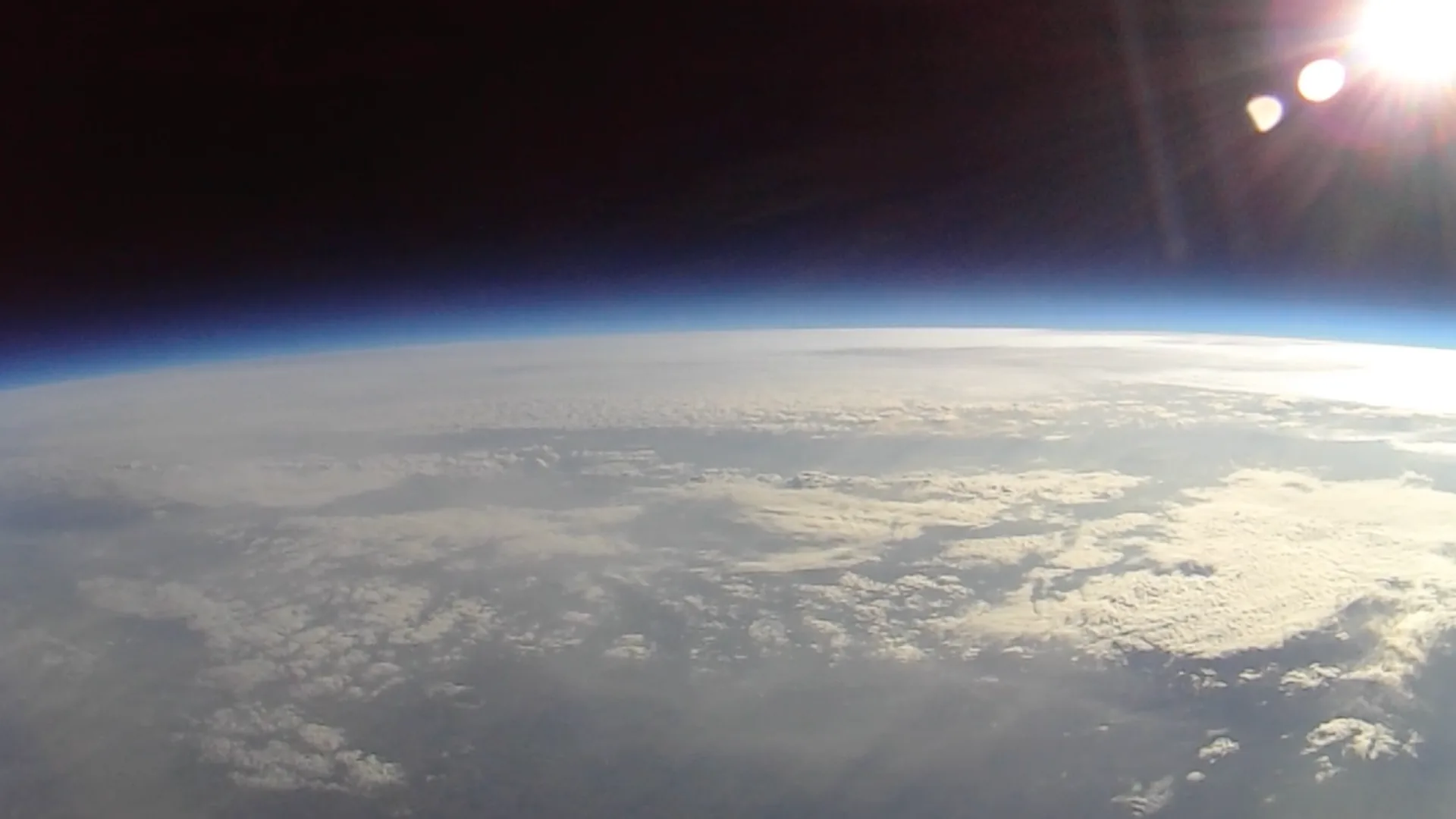
We're built for one thing in the UAS world: qualifying payloads destined for the stratosphere. Our environment is 60,000 to 100,000 ft, the operating band of HAPS, HALE aircraft, and high-altitude ISR balloons, and almost nothing else in UAS.
We're a strong fit if your payload will fly on:
- A HAPS or HALE platform (Zephyr-, PHASA-35-, Horus-, Skydweller-class)
- A high-altitude ISR balloon program (Army HAP-DS / HELIOS-class, World View, Aerostar-class)
- Any mission that puts your sensor above ~55,000 ft
We're probably not your provider if your payload is designed for operations below 30,000 ft: delivery, agriculture, inspection, standard surveillance, FPV, or Group 1–3 tactical UAS. The stratospheric environment delta is meaningless for those, and we won't pretend otherwise.
And to be clear about what we test: we qualify the payload that rides your platform, meaning its survival and function at altitude. We do not test airframes, flight dynamics, or airworthiness. The balloon carries your payload gondola; it is not your aircraft.
Payloads We Qualify for High-Altitude Operation
EO/IR imaging: MWIR/LWIR focal-plane arrays, gimbals, germanium optics
RF / datalink / SATCOM: real stratospheric propagation, link-margin validation
Mesh-network & tactical radios: propagation a chamber can't replicate
Synthetic Aperture Radar (SAR): thermal, antenna, and power-budget validation
Atmospheric & scientific sensors: methane, ozone, weather, radiation
Edge-AI / autonomy: thermal throttling and radiation bit-flip exposure above 60,000 ft
If your payload is bound for the stratosphere and it's not on this list, ask us.
Two Ways to Fly
Flight Qualification Service (FQS)
Rapid qualification of a single stratospheric payload at 80,000–100,000 ft. 2–6 lb, 2–3 hours. Firm-fixed price, quoted in two business days.
FQS Details ↓Integrated Flight Service (IFS)
Extended-duration, real-time-commanded qualification of an integrated payload at sustained 60,000–80,000 ft for 3–6 hours. 4–80 lb. Firm-fixed price, quoted in two business days.
IFS Details ↓100K ft
Max Altitude
2–80 lb
Payload Range
2–6 hrs
Flight Duration
72 hrs
Hardware Returned
Private missions carry payloads up to 80 lb, beyond the 20 lb rideshare limit. Compare FQS and IFS ↓
The Test Other Options Can't Give a Payload Supplier
A Real Environment a Chamber Can't Fake
−65°C, under 1% pressure, cosmic radiation, and real RF propagation, all at once, in the band your payload will operate in. A thermovac chamber can't reproduce real path loss, real radiation bit-flip, or real stratospheric flight. We don't simulate the stratosphere; we fly you to it.
A US-Based, US-Person Platform
Defense ISR payloads (SAR, EW, SIGINT, fire-control optics) often need a test environment that's US-located and US-person-operated. StratoStar flies from multiple locations across the U.S., operated by US persons. A Sensitive Payload option is available: data segregation, access controls, customer-only commanding, and handling under NDA via our Sensitive Payload Addendum.
Commercial Access, a Firm Date
DoD ranges need classified-program access; HAPS developers' flight tests are closed to outside payloads; NASA Flight Opportunities is queued 12–24 months with no firm date. StratoStar is the option you can actually book: a published Flight Test Calendar, a firm-fixed price within an SBIR Phase II budget, and hardware back in 72 hours.
Upcoming Flight Windows
Published dates you can plan a milestone around. Windows are weather-driven: we fly within a target window and confirm the day as it approaches. Private Missions are scheduled around your program and are not listed here.
Oct 26, 2026
Filling
FQS · Nebraska · 2–3 hr · ≤6 lb
Nov 16, 2026
Filling
FQS · Nebraska · 2–3 hr · ≤6 lb
Dec 14, 2026
Open
FQS · Nebraska · 2–3 hr · ≤6 lb
Jan 15, 2027
Open
FQS · Nebraska · 2–3 hr · ≤6 lb
Feb 1, 2027
Filling
IFS · New Mexico · 3–6 hr float · ≤20 lb
FQS
Flight Qualification Service (FQS)
Rapid qualification for a single stratospheric payload.
FQS is the fast way to prove one stratosphere-bound subsystem before it is integrated onto a HAPS, HALE or high-altitude balloon platform. Qualify one sensor or subsystem (an EO/IR camera, a datalink radio, a power board) at 80,000–100,000 ft, in the environment it will actually operate in.
One flight, one payload, one question: RF propagation for a datalink, thermal behavior of an EO/IR focal plane, cold endurance of a power system. Real near-space conditions a thermovac chamber cannot reproduce.
We qualify the payload, not the platform. The balloon carries your payload gondola to altitude; it does not fly your airframe. If you need to know your sensor survives and performs at altitude before it rides a multi-million-dollar aircraft, this is the test. Firm-fixed price, inclusive of the Mission Access Fee, quoted in two business days. Rideshare as standard, Private Mission on request. US-based, US-person operations.
FQS Specs
- Payload
- 2–6 lb (6 lb FAA limit)
- Altitude
- 80,000–100,000 ft
- Duration
- 2–3 hours
- Data
- Onboard logging, post-flight download
- Recovery
- 99%+ recovery rate
- Turnaround
- Hardware back within 72 hours
- Pricing
- Firm-fixed, quoted in 2 business days
- Variants
- Rideshare, or Private Mission
Built For
- EO/IR and imaging payload validation
- RF / SATCOM datalink propagation at altitude
- Power and thermal endurance in the cold
- Mesh radio and comms-relay performance
What's Included
- Custom mounting fixtures, designed and fabricated for your payload
- Complete FAA coordination and airspace clearances
- Professional launch, tracking and recovery operations
- 5 hours of engineering consulting
- Sensitive Payload handling on request: data segregation and access controls
What You Get Back
- A Mission Package with environmental characterization
- Your onboard flight data, downloaded after recovery
- Your hardware back within 72 hours of landing
IFS
Integrated Flight Service (IFS)
Extended-duration, real-time qualification for an integrated payload.
IFS flies an integrated multi-sensor package, mesh-radio node or autonomy stack at 60,000–80,000 ft for 3–6 hours, with a live two-way Starlink link so you can command and reconfigure it at altitude. It is the persistent-ISR environment your payload will operate in, without the airframe.
Why a balloon? Same altitude band, same thermal environment, same RF propagation and same atmospheric pressure as a HAPS or HALE platform, minus the airframe, the build effort and the cost. We qualify the payload, not the aircraft.
A Rideshare carries up to 20 lb. A Private Mission is flown for your payload alone and carries up to 80 lb. Both are firm-fixed per mission, inclusive of the Mission Access Fee, and quoted within two business days. US-based, US-person operations.
IFS Specs
- Payload
- 4–80 lb
- Rideshare
- Up to 20 lb
- Private Mission
- Up to 80 lb
- Altitude
- 60,000–80,000 ft (sustained)
- Duration
- 3–6 hours
- Telemetry
- Starlink real-time + onboard logging
- Commanding
- Yes, real-time via Starlink
- Recovery
- 99%+ recovery rate
- Pricing
- Firm-fixed, quoted in 2 business days
Built For
- Multi-sensor ISR integration testing
- Mesh radio network validation
- Autonomy algorithm testing at altitude
- HAPS subsystem endurance qualification
What's Included
- Everything in FQS: fixtures, FAA coordination, launch, tracking and recovery, 5 hours of consulting
- Starlink real-time telemetry throughout the flight
- Active payload commanding from the ground
- Extended flight operations, 3–6 hours
- Sensitive Payload handling: data segregation, access controls, customer-only commanding, and NDA handling under our Sensitive Payload Addendum
What You Get Back
- An engineering report with environmental characterization
- A Mission Package with the complete data archive: telemetry, video and photos
- Live telemetry during the flight, plus the onboard log after recovery
- Your hardware back within 72 hours of landing
FQS vs IFS, Side by Side
- Best for
- FQSOne sensor or subsystemIFSAn integrated package, mesh node or autonomy stack
- Payload
- FQS2–6 lbIFS4–80 lb (20 lb rideshare, 80 lb private)
- Altitude
- FQS80,000–100,000 ftIFS60,000–80,000 ft, sustained (the HAPS band)
- Duration
- FQS2–3 hoursIFS3–6 hours
- Data
- FQSOnboard logging, downloaded after recoveryIFSStarlink real-time telemetry + onboard logging
- Commanding in flight
- FQSNot includedIFSYes, two-way via Starlink
- Report
- FQSMission Package with environmental characterizationIFSEngineering report + complete data archive
- Private Mission
- FQSAvailableIFSAvailable, up to 80 lb
- Sensitive Payload handling
- FQSAvailableIFSAvailable, incl. customer-only commanding
- Hardware back
- FQSWithin 72 hoursIFSWithin 72 hours
- Recovery rate
- FQS99%+IFS99%+
- Pricing
- FQSFirm-fixed, quoted in two business daysIFSFirm-fixed, quoted in two business days
| Spec | FQS | IFS |
|---|---|---|
| Best for | One sensor or subsystem | An integrated package, mesh node or autonomy stack |
| Payload | 2–6 lb | 4–80 lb (20 lb rideshare, 80 lb private) |
| Altitude | 80,000–100,000 ft | 60,000–80,000 ft, sustained (the HAPS band) |
| Duration | 2–3 hours | 3–6 hours |
| Data | Onboard logging, downloaded after recovery | Starlink real-time telemetry + onboard logging |
| Commanding in flight | Not included | Yes, two-way via Starlink |
| Report | Mission Package with environmental characterization | Engineering report + complete data archive |
| Private Mission | Available | Available, up to 80 lb |
| Sensitive Payload handling | Available | Available, incl. customer-only commanding |
| Hardware back | Within 72 hours | Within 72 hours |
| Recovery rate | 99%+ | 99%+ |
| Pricing | Firm-fixed, quoted in two business days | Firm-fixed, quoted in two business days |
Which One Is Right for You?
Pick FQS if
You are qualifying one sensor or subsystem, 6 lb or less, and the question is survival and performance at altitude: does the focal plane hold calibration, does the datalink close, does the power system make it through the cold.
Pick IFS if
You need to operate the payload while it flies: command it, reconfigure it, watch it in real time, or run several sensors or network nodes together for hours in the HAPS band. Or it simply weighs more than 6 lb.
Not sure? That is what the first call is for. Tell an engineer what the flight has to prove and we will tell you which service fits, straight, even when the answer is the smaller one.
Frequently Asked Questions
Yes. A high-altitude balloon carries your payload to 60,000–100,000 ft, the operating band of HAPS and HALE platforms. You get real RF propagation and environmental data in the actual operating environment, without the cost and complexity of flying the aircraft. We qualify the payload, not the airframe.
HAPS and HALE platforms operate at 60,000–80,000 ft. StratoStar's IFS service sustains altitude at exactly this range for 3–6 hours, the same thermal, pressure, and RF environment your payload will experience in operation.
Flying the aircraft introduces airframe variables, far higher cost, and far more build effort. A balloon flight isolates your payload, so you learn exactly how your sensor, datalink, or power system behaves at altitude before it rides a multi-million-dollar HAPS or HALE platform. We qualify the payload, not the airframe.
Very. HAPS and HALE platforms operate at 60,000–80,000 ft for extended durations. StratoStar's IFS provides the exact qualification environment (same altitude, same thermal conditions, same atmospheric pressure) at a fraction of full airframe cost, with live two-way commanding throughout.
The Mission Package: environmental characterization (temperature, pressure, altitude profile), your payload's telemetry, photography and video, and an engineering report. Hardware is returned within 72 hours of landing.