

Flight Test Services
Flight Qualification Service (FQS)
Rapid flight test for space components. 2–6 lb payload, 80,000–100,000 ft altitude, 2–3 hour flights. Firm-fixed price, quoted in two business days.
FQS Details ↓Integrated Flight Service (IFS)
Full-mission flight test for complex space systems. 4–80 lb payload, sustained altitude with Starlink real-time telemetry and commanding. Firm-fixed price, quoted in two business days.
IFS Details ↓100K ft
Max Altitude
2–80 lb
Payload Range
2–6 hrs
Flight Duration
1–3 mo
Turnaround
Private missions carry payloads up to 80 lb, beyond the 20 lb rideshare limit. Compare FQS and IFS ↓
What Is a Stratospheric Balloon Flight Test?
A stratospheric balloon carries your hardware to 60,000–100,000 ft, into near-space, and holds it there while it runs. Your payload sees near-vacuum, −60°C to −70°C, cosmic radiation and real RF path loss at the same time, which is the part a ground chamber cannot reproduce. Then it comes back, with the data and the hardware in your hands inside 72 hours.
StratoStar is a stratospheric balloon flight test company. We do not sell balloons or build platforms for other people to operate. We fly your hardware, on a firm-fixed price, against a published Flight Test Calendar.
Why Near-Space Flight Test
Real Environment, Real Data
Near-vacuum, -60°C to -70°C, <1% sea level pressure, cosmic radiation. Your hardware operates in an integrated, in-situ environment, not isolated in a chamber.
Speed & Certainty
A published Flight Test Calendar. Firm-fixed pricing. 1–3 month turnaround from contract to flight data. No budget surprises, no schedule slips.
TRL Advancement
A Mission Package suitable for TRL assessment. Get from TRL 5 to TRL 7 with real flight-heritage data, the proof your stakeholders need.
Upcoming Flight Windows
Published dates you can plan a milestone around. Windows are weather-driven: we fly within a target window and confirm the day as it approaches. Private Missions are scheduled around your program and are not listed here.
Oct 26, 2026
Filling
FQS · Nebraska · 2–3 hr · ≤6 lb
Nov 16, 2026
Filling
FQS · Nebraska · 2–3 hr · ≤6 lb
Dec 14, 2026
Open
FQS · Nebraska · 2–3 hr · ≤6 lb
Jan 15, 2027
Open
FQS · Nebraska · 2–3 hr · ≤6 lb
Feb 1, 2027
Filling
IFS · New Mexico · 3–6 hr float · ≤20 lb
FQS
Flight Qualification Service (FQS)
Rapid flight test for one space component. Fly it, read the data, fix it, fly it again.
FQS is our fast flight test for a single space component. Your radio, solar panel, sensor, antenna, deployer or avionics board rides to 80,000–100,000 ft and sees near-vacuum, extreme cold, cosmic radiation and real RF propagation at the same time. That integrated, in-situ exposure is the thing a ground chamber cannot give you.
It is sized for component-level proof: does this part work in real flight conditions before you commit it to an orbital launch slot? A published Flight Test Calendar and a firm-fixed price make iteration practical. Fly, fix, fly again, without reopening the budget each time.
Pricing is firm-fixed per mission, inclusive of the Mission Access Fee, and quoted within two business days. FQS flies as a rideshare; if you need the flight to yourself, a Private Mission is available and quoted the same way.
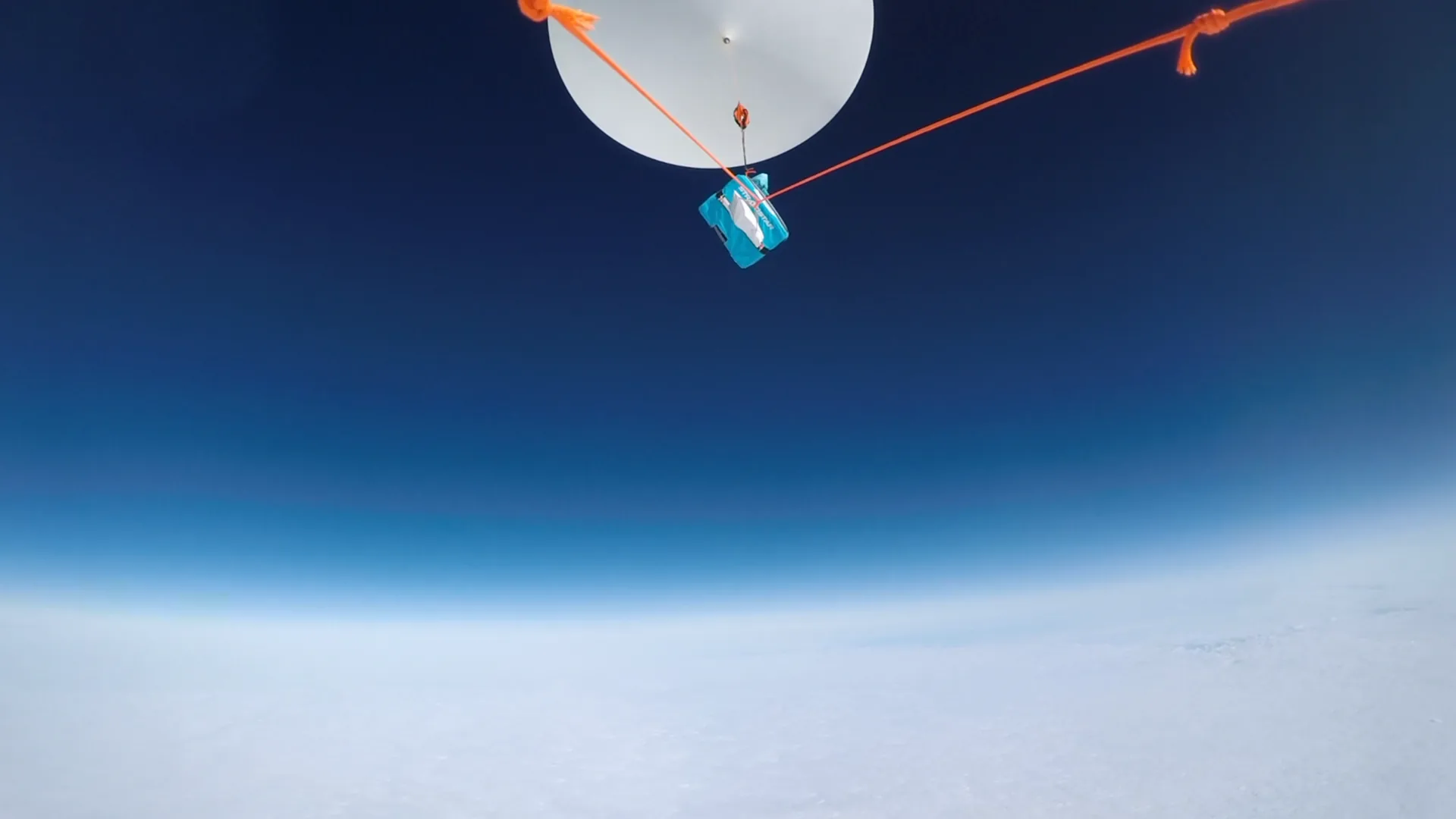
FQS Specs
- Payload
- 2–6 lb (6 lb FAA limit)
- Altitude
- 80,000–100,000 ft
- Duration
- 2–3 hours
- Data
- Onboard logging, post-flight download
- Recovery
- 99%+ recovery rate
- Turnaround
- Hardware back within 72 hours
- Pricing
- Firm-fixed, quoted in 2 business days
- Variants
- Rideshare, or Private Mission
Built For
- Component manufacturers who need flight heritage for a datasheet or proposal
- CubeSat teams proving one subsystem before integration
- Component validation and thermal cycling
- RF propagation testing at altitude
- Rapid iteration: fly, fix, fly again
What's Included
- Custom mounting fixtures, designed and fabricated for your hardware
- Complete FAA coordination and airspace clearances
- Professional launch, tracking and recovery operations
- 5 hours of engineering consulting
- Sensitive Payload handling on request: data segregation and access controls
What You Get Back
- A Mission Package suitable for TRL and flight-heritage assessment
- Your onboard flight data, downloaded after recovery
- Your hardware, back in your hands within 72 hours of landing
IFS
Integrated Flight Service (IFS)
Full-mission flight test for integrated space systems, commanded live from the ground.
IFS is our full-mission flight test. Complex, multi-instrument payloads hold sustained altitude at 60,000–80,000 ft for 3–6 hours, with Starlink real-time telemetry and two-way commanding the whole way. This is system-level validation: how your components behave together, in real conditions, while you operate them.
It is for teams who need more than a quick component check: a long thermal soak, a live data downlink, active commanding of the payload and several instruments working in concert, at a fraction of what an orbital flight costs.
It flies two ways. A Rideshare carries up to 20 lb. A Private Mission is flown for your payload alone and carries up to 80 lb. Both are firm-fixed per mission, inclusive of the Mission Access Fee, and quoted within two business days.
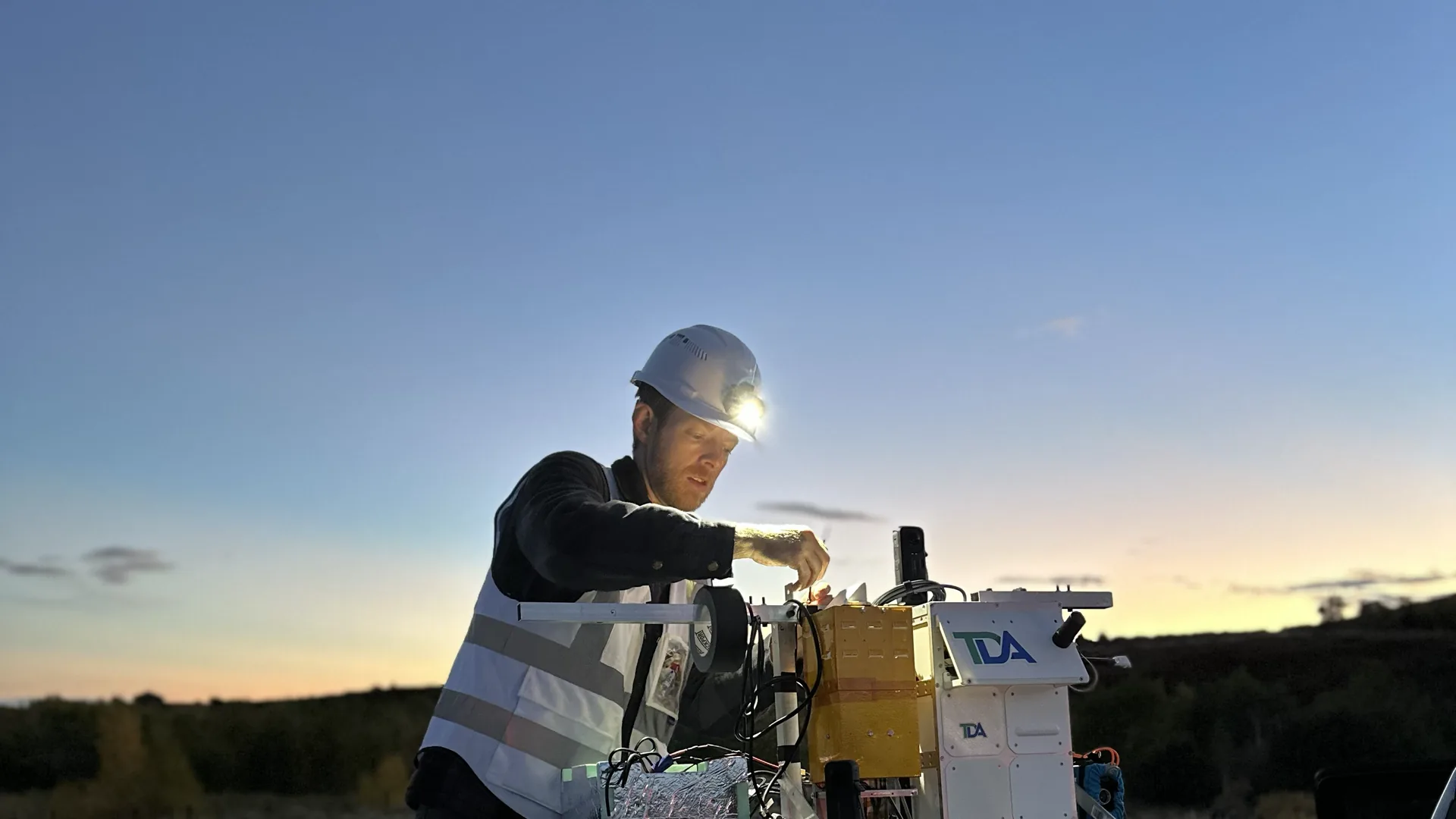
IFS Specs
- Payload
- 4–80 lb
- Rideshare
- Up to 20 lb
- Private Mission
- Up to 80 lb
- Altitude
- 60,000–80,000 ft (sustained)
- Duration
- 3–6 hours
- Telemetry
- Starlink real-time + onboard logging
- Commanding
- Yes, real-time via Starlink
- Recovery
- 99%+ recovery rate
- Pricing
- Firm-fixed, quoted in 2 business days
Built For
- Integrated subsystems and experiments you operate live at altitude
- System-level integration testing
- Long-duration thermal soak
- Multi-instrument coordination
- Optical and pointing-sensitive imagers that need a steadier platform than a short ascent
What's Included
- Everything in FQS: fixtures, FAA coordination, launch, tracking and recovery, 5 hours of consulting
- Starlink real-time telemetry throughout the flight
- Active payload commanding from the ground
- Extended flight operations, 3–6 hours
- Sensitive Payload handling: data segregation, access controls and customer-only commanding
What You Get Back
- An engineering report with TRL assessment
- A Mission Package with a 10-slide executive presentation
- Live telemetry during the flight, plus the onboard log after recovery
- Your hardware back within 72 hours of landing
FQS vs IFS, Side by Side
- Best for
- FQSOne component or subsystemIFSIntegrated systems and full payloads
- Payload
- FQS2–6 lbIFS4–80 lb (20 lb rideshare, 80 lb private)
- Altitude
- FQS80,000–100,000 ftIFS60,000–80,000 ft, sustained
- Duration
- FQS2–3 hoursIFS3–6 hours
- Data
- FQSOnboard logging, downloaded after recoveryIFSStarlink real-time telemetry + onboard logging
- Commanding in flight
- FQSNot includedIFSYes, two-way via Starlink
- Report
- FQSMission Package for TRL and flight-heritage assessmentIFSEngineering report with TRL assessment + executive presentation
- Private Mission
- FQSAvailableIFSAvailable, up to 80 lb
- Sensitive Payload handling
- FQSAvailableIFSAvailable, incl. customer-only commanding
- Hardware back
- FQSWithin 72 hoursIFSWithin 72 hours
- Recovery rate
- FQS99%+IFS99%+
- Pricing
- FQSFirm-fixed, quoted in two business daysIFSFirm-fixed, quoted in two business days
| Spec | FQS | IFS |
|---|---|---|
| Best for | One component or subsystem | Integrated systems and full payloads |
| Payload | 2–6 lb | 4–80 lb (20 lb rideshare, 80 lb private) |
| Altitude | 80,000–100,000 ft | 60,000–80,000 ft, sustained |
| Duration | 2–3 hours | 3–6 hours |
| Data | Onboard logging, downloaded after recovery | Starlink real-time telemetry + onboard logging |
| Commanding in flight | Not included | Yes, two-way via Starlink |
| Report | Mission Package for TRL and flight-heritage assessment | Engineering report with TRL assessment + executive presentation |
| Private Mission | Available | Available, up to 80 lb |
| Sensitive Payload handling | Available | Available, incl. customer-only commanding |
| Hardware back | Within 72 hours | Within 72 hours |
| Recovery rate | 99%+ | 99%+ |
| Pricing | Firm-fixed, quoted in two business days | Firm-fixed, quoted in two business days |
Which One Is Right for You?
Pick FQS if
You are proving one component works in near-space: a radio, a panel, a sensor, a board. It weighs 6 lb or less, it can log its own data, and you want the answer fast enough to fix it and fly again.
Pick IFS if
You are proving a system: several instruments that have to work together, a payload you need to watch and command while it flies, or hardware that needs hours of thermal soak at a steady altitude. Or it simply weighs more than 6 lb.
Not sure? That is what the first call is for. Tell an engineer what the flight has to prove and we will tell you which service fits, straight, even when the answer is the smaller one.
Frequently Asked Questions
A near-space flight test flies your hardware to 60,000–100,000 ft on a high-altitude balloon platform. Your payload experiences near-vacuum, extreme cold (-60°C to -70°C), cosmic radiation, and real RF propagation conditions, an integrated, in-situ flight test environment.
TVAC isolates thermal behavior in a chamber. Near-space flight test provides an integrated environment where thermal, vacuum, radiation, and RF conditions act on your hardware simultaneously, the way they will in actual operation. Both are valuable; StratoStar is additive to traditional testing.
A near-space flight test can advance your technology from TRL 5 (component validation in a relevant environment) to TRL 7 (system prototype demonstration in an operational environment). StratoStar delivers a Mission Package structured for TRL assessment.
StratoStar publishes a Flight Test Calendar with a typical 1–3 month turnaround from contract to flight data delivery. Firm-fixed pricing, with no budget surprises.
99%+ recovery rate. Your hardware is recovered and returned within 72 hours of landing, along with a preliminary results package. The complete Mission Package follows in 4–5 weeks.